

What was needed
The job was bigger than an attractive product page. A product nobody has seen before only sells online when the store answers every question a careful buyer has.
That meant a product story worth reading, a clear catalog, honest policies, a cart and checkout people recognize, a way to be found in search, analytics that respect privacy, and the launch details that make a new store feel dependable.
Who it's for: People discovering an original cat-enrichment product and deciding whether a new store is trustworthy enough to buy from.
Constraints
- An original physical product that needed explanation before anyone would consider buying it.
- Ecommerce trust expectations: clear policies, shipping and returns answers, and a checkout people recognize.
- Mobile-first shopping behavior; the store had to work as well on a phone as on a desktop.
- Analytics had to respect visitor consent instead of tracking by default.
- Launch readiness: policies, FAQ, setup content, and technical details had to exist before promotion, not after.
What was built
Product and storefront
- Product storytelling that explains what the product is and why it exists
- A focused catalog and clear product hierarchy
- A responsive product experience across phone, tablet, and desktop
Commerce
- A working cart
- Checkout through Stripe
- Customer-facing shipping and returns information
Trust
- Store policies
- FAQ content
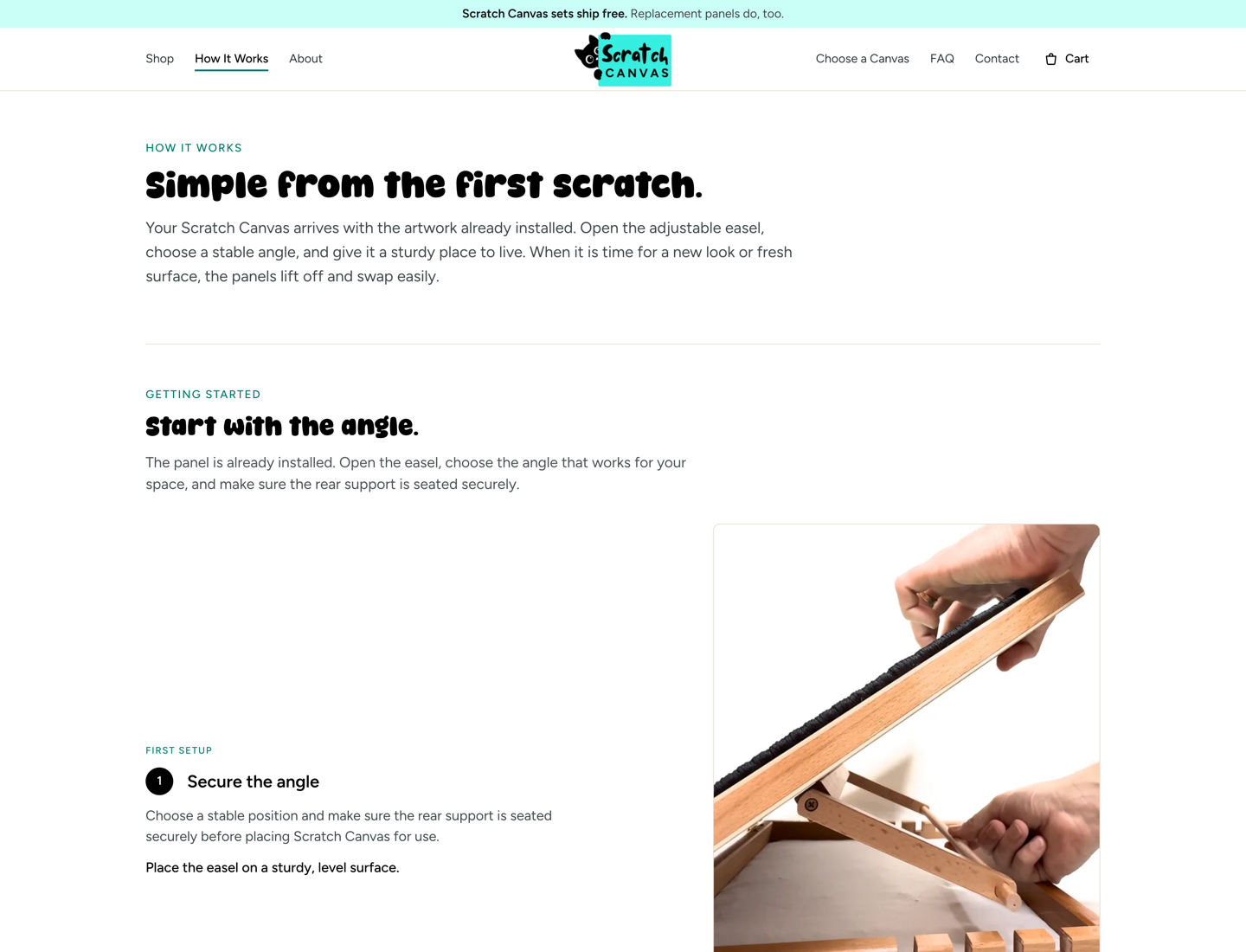
- Setup and how-it-works guidance
Search and analytics
- SEO foundation and page metadata
- Analytics that wait for consent
Key decisions
Build an owned storefront instead of treating checkout as the whole experience.
The product needed storytelling, trust content, and a web home the business controls. A payment link alone cannot do that work.
Use Stripe's hosted checkout instead of building payment handling from scratch.
Payments are the highest-risk part of a small store. A recognized hosted checkout keeps card handling with a specialist and keeps the build maintainable.
Treat policies, FAQ, and setup guidance as part of the product experience.
For an unfamiliar product, trust content is not legal filler. It answers the questions that decide whether someone buys.
Ask for consent before analytics run.
Measurement is useful, but it is not more important than visitor privacy. Consent came first.
What works now
A live store you can visit right now, on a phone or a desktop: product pages, a working cart, checkout, policies, FAQ, and setup guidance.


Role and tools
Product strategy, content structure, UX/UI, Next.js implementation, Stripe checkout integration, SEO foundation, analytics and consent, launch QA.
- Next.js
- Stripe
- Netlify
- GA4 with consent
Lessons and what's next
- Most of what makes a small store credible is not the product page. It is the surrounding structure of policies, trust answers, and launch detail.
- A focused catalog is easier to launch, easier to explain, and easier to maintain than a large one.